
What's in a wood heater flue kit, and what will your home need?
Posted by Ultimate Showroom on
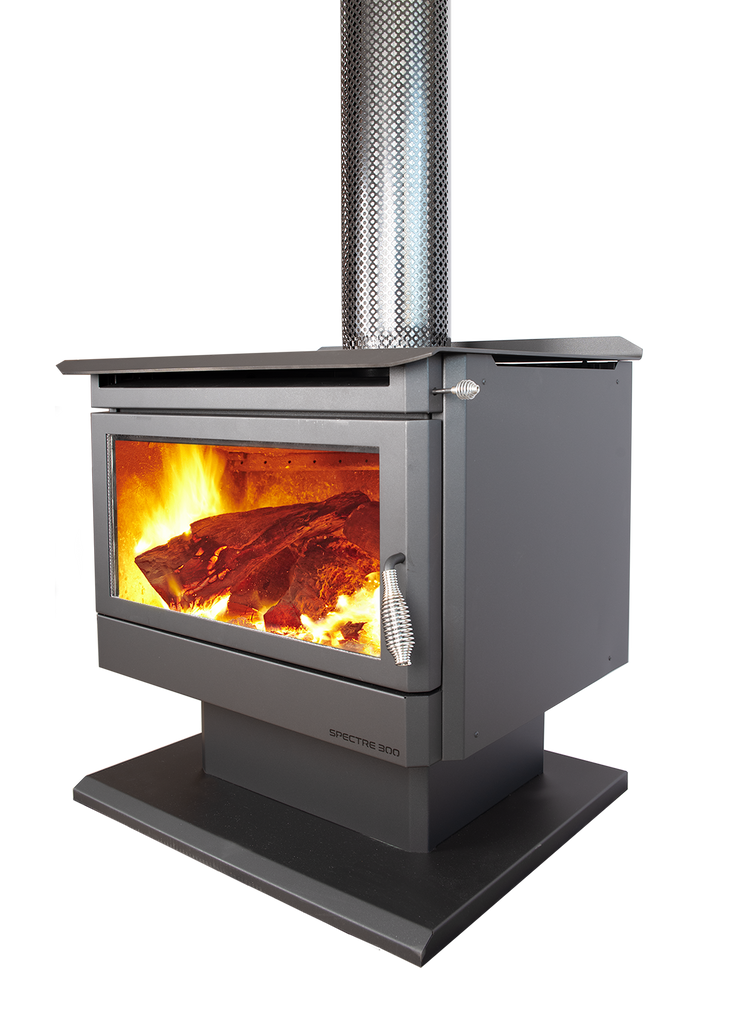
Two installers have stood in the same lounge room, looked at the same corner and measured the same wall. The heater on both quotes is the same model. The prices came back more than a thousand dollars apart.
Almost all of that gap sits above the ceiling.
A wood heater flue is the pipe system that carries smoke from the firebox out above the roofline. A flue kit is the set of parts that gets it there. It holds a stainless steel inner pipe and one or two outer casings. On top of those come a ceiling ring, roof flashing and a cowl. A standard kit suits a single storey home with an ordinary ceiling height. Extra flue length, a raked ceiling, a tile roof or a second storey all add to that.
What's in a wood heater flue kit?
A flue kit is everything between the top of the heater and the open air. The parts come as a set because they have to fit each other. Heaters are tested and approved with a particular flue system rather than with pipe in general.
- Active flue: the stainless steel inner pipe the smoke and gases travel through.
- Outer casing: one or two galvanised or stainless pipes around the active flue, holding its heat away from timber.
- Decorative flue: the length you can see in the room, between the heater and the ceiling.
- Ceiling ring: the plate that finishes the hole where the flue passes through the ceiling.
- Flashing: the weatherproof collar at the roof penetration, matched to a tile or a metal roof.
- Cowl, or flue cap: the fitting on top that keeps rain out and helps the flue draw.
The number of casings is what people mean by single, double and triple skin. Single skin is bare stainless pipe. Double skin adds one outer case around it. Triple skin adds two. Once the pipe passes through a ceiling or a wall it has to be cased. A working flue runs far too hot to sit near a rafter or against loose insulation.
Inbuilt heaters add one more layer. The masonry enclosure around the heater has to be vented. The flue is double cased where it passes through the top of that enclosure. The vent lets cooling air move up the casing. On a quote it shows up as labour rather than as parts.
The installation manual for these heaters lists two items that rarely appear on a showroom price list. One is the pair of galvanised brackets that carry the flue across the roof joists. They stop the ceiling ring taking the weight. The other is any extra flue or parts worked out at the site inspection. That second line is the one that moves the price.
How high does a wood heater flue have to be?
Flue height is set by AS/NZS 2918. That is the Australian Standard for installing domestic solid fuel burning appliances. The National Construction Code points to it for wood heaters. It decides how much flue your house needs.
The rules are short. The flue has to reach at least 4.6 metres above the top of the floor protector. Within three metres of the highest point of the roof, it has to finish 600 millimetres above that point. Further out than three metres, it has to finish a metre above the hole it comes through. No part of the building can sit inside a three metre circle around the flue exit.
Run those numbers on a normal house and a standard kit stops looking generous. A 2.4 metre ceiling and a heater 800 millimetres tall leaves a long way to go. Roof pitch and the position of the flue against the ridge decide the rest. A standard kit is sized for the ordinary case. It gives a set length of cased flue above the ceiling. The installer adds more casing until the height rule is met. This is why an installer looks up before quoting.
The heights are about draught as much as safety. A flue that finishes too low will downdraught on the first windy night. The smoke comes back into the room instead of leaving the house.
A flue that finishes too low will downdraught on the first windy night.
Certification sits with the installer. The work has to be approved, and the person who carries it out issues a certificate of compliance. That certificate is also what an insurer will ask for.
What changes the cost of a wood heater flue?
The starting figure is published. Every Ultimate heater package lists a standard flue kit at $650, freestanding or inbuilt. That covers a straightforward run in a single storey home. Everything past the standard kit is priced from the house rather than the heater.
The flue is where two quotes on the same heater come apart. Six things drive the difference.
The flue is where two quotes on the same heater come apart.
| What the installer looks at | Why it changes the price |
|---|---|
| Ceiling height, flat or raked | More flue in the room, and more casing above it |
| Single or double storey | More flue again, plus roof access and often scaffolding |
| Tile or metal roof | A different flashing, and tile takes longer to cut and seal |
| Where the flue exits against the ridge | Decides whether the 600 millimetre rule or the one metre rule applies |
| Bends around obstructions | Extra parts and labour, and installers hold these to a minimum |
| Coastal air | A case for stainless outer casing rather than galvanised |
A bend costs more than the metre of pipe it replaces. Bends slow the draught too. A good installer will shift the heater 300 millimetres rather than put a kink in the flue.
Salt is the other one. Galvanised casing near the water at Geelong or Perth gives up years before stainless does. That gets decided at quoting time rather than later.
Heater and flue together, a full installation runs from roughly $1,000 to $5,500. Where a home lands in that range is mostly the flue.
Can you reuse the flue or the chimney when you replace a heater?
The flue, usually not. The chimney, often yes.
Flue kits are approved with the appliance they were sold with. Mixing flue components from different sources can create a hazardous situation. So can changing their dimensions, and manufacturers say so in writing. Add twenty years of heat and creosote, and the case for keeping an old flue gets thin.
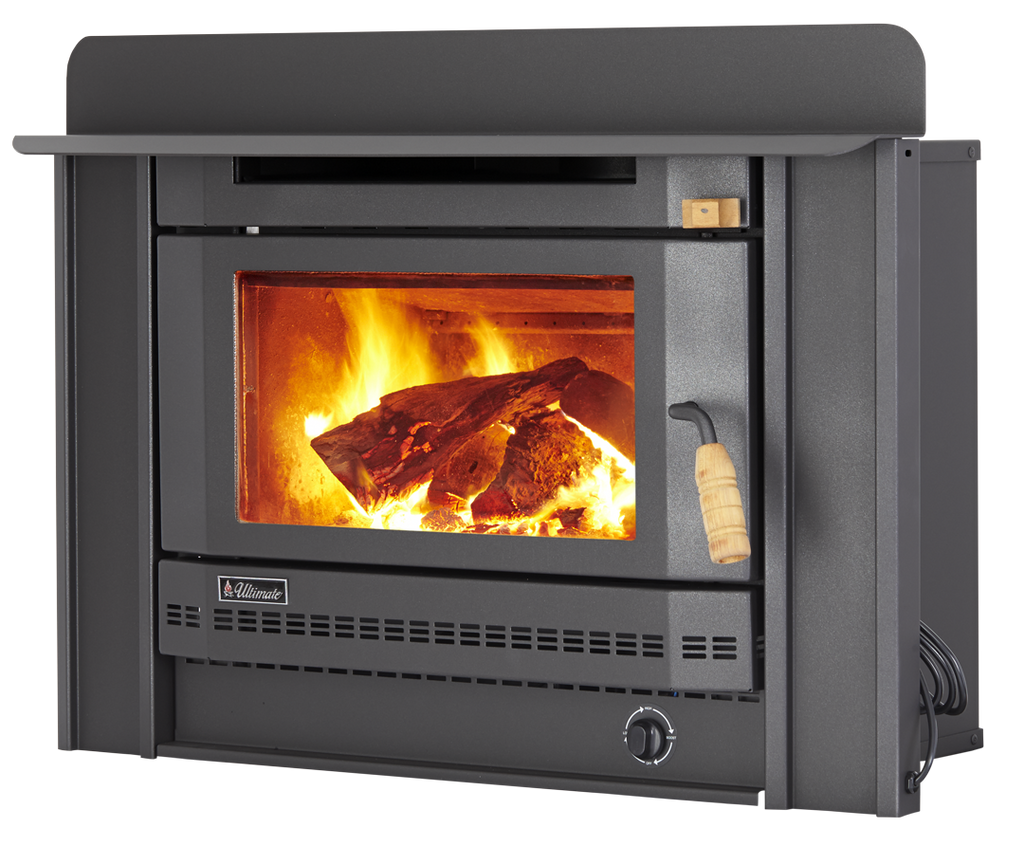
An existing masonry fireplace is a different question. It works as a route rather than as the flue itself. A new flue pipe runs up inside the chimney and finishes outside it. Some inbuilt models are built for exactly that job in an old gas or oil fireplace. Before any of it, the fireplace and chimney have to be cleaned and inspected. They need to be sound before a heater goes in. Offsets are often needed to clear obstructions in the chimney throat. They still have to leave the flue able to be swept. The height rule does not soften for an old fireplace either. The 4.6 metres is measured from the floor, and an old chimney is often shorter than that.
One part you will not find in a current kit is a damper. New heaters control the fire through the air control instead. Fitting a damper to one is not permitted. Older heaters are a different matter, and the damper is worth understanding if yours has one.
Wood heater flues in a new build
New houses are sealed far more tightly than the ones wood heaters grew up in. Since 1 May 2024, new homes have had to meet the 7 star standard under NCC 2022. The draught proofing that comes with it changes how a fire behaves.
A wood heater needs air. In a tight house it competes for that air with the range hood, the bathroom fan and the dryer. The result is a fire that is slow to catch. Or a puff of smoke into the room when you open the door to load it.
Two things deal with that. An outside air supply feeds combustion air to the heater through its own duct. The fire stops drawing on the room. An insulated or room sealed flue kit closes the gap at the ceiling. Warm air is no longer pulled up the casing and lost. Ask which options suit the model you are looking at, and ask before the frame goes up. A flue route and an air duct are both easier to plan than to retrofit.
Common questions about wood heater flues
What is the difference between a flue and a chimney?
A chimney is a built structure, usually masonry, that surrounds a fire and carries smoke upward. A flue is the pipe the smoke travels through. A chimney can hold a flue inside it. A wood heater has a flue whether or not there is a chimney around it.
Does a wood heater flue have to go straight up?
Vertical is the aim, and most installations manage it. Where something is in the way, a set of bends can move the flue around it. Installers hold this to one set wherever they can. Every offset costs draught, adds parts and makes sweeping harder.
How often does a wood heater flue need cleaning?
Clean it before each heating season, then at roughly three month intervals through winter. Clean it more often if the firewood has been poor. Creosote builds fastest on slow overnight burns, and it is flammable once it dries.
What to have ready before the installer quotes
A flue is specified from three things at once: the heater model, the ceiling height and the roof. Take one away and a quote becomes a guess.
So measure the floor to ceiling height. Note whether the ceiling is flat or raked. Count the storeys. Look at the roof and note whether it is tile or metal. Note roughly where the flue would come through in relation to the ridge. Four answers, and two quotes you can hold side by side.
Bring those numbers to a showroom in Victoria, South Australia or Western Australia. The flue then gets specified with the heater rather than after it.
- Tags: Wood Wood Heaters