
Should you buy a second-hand wood heater?
Posted by Ultimate Showroom on
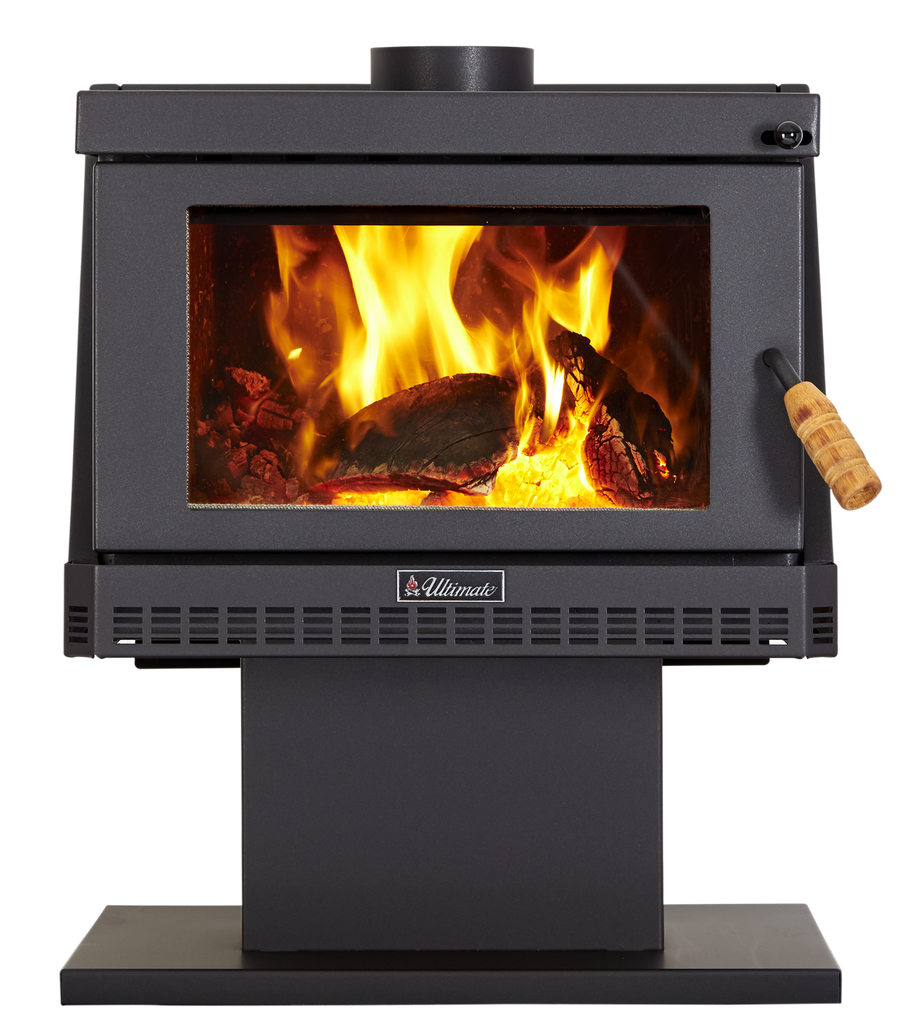
Image you're looking online at a buy/sell listing which shows a heater that looks barely used. The price is a fraction of a new one. There is one photo, taken from the front, in a lounge room that is already half packed up. Is it worth it?
Sometimes it is worth it. A second-hand wood heater is a reasonable buy on three conditions. It carries a legible compliance plate. The brand still makes parts for it. And you have budgeted for a new flue. Fail any one of those and the saving usually disappears before the first fire. Five checks decide it, and they are worth making in order.
Check the compliance plate first
The compliance plate is a small metal label stating the model and the standards the heater was tested against. On these heaters it sits on the back panel, and most brands are similar. A listing photographed from the front never shows it.
Wood heaters sold in Australia have had to meet two standards since 2019. AS/NZS 4013 caps particle emissions at 1.5 grams per kilogram of wood burnt. AS/NZS 4012 sets a minimum efficiency of 60 per cent. The plate is how anyone can tell the heater was tested to both.
The plate is usually the first thing on a heater to become unreadable. Heat, ash and years of cleaning take the print off it. A blank plate does not prove the heater failed a standard. It does mean nobody can prove it passed.
You can also check the model against the certified list published by the Australian Home Heating Association. EPA Victoria points buyers to the same list. An older model may have dropped off it, so absence proves nothing on its own.
The plate is usually the first thing on a heater to become unreadable.
Will an installer certify it?
Installing a wood heater is licensed work, and the installer signs off on the job. The work has to comply with AS/NZS 2918, the Australian Standard for installing solid fuel appliances. In Victoria this work sits under mechanical services plumbing.
The installer decides whether your heater goes in. Many will not fit a second-hand unit without a legible plate, because they are the ones certifying it. Have that conversation before money changes hands.
Ask the seller for the model name and a photo of the plate. Ring an installer and give them both. One phone call settles most of this.
Councils add a layer on top. Some require a building permit for a new installation and some do not. Keep the certificate of compliance the installer issues at the end. It is the document you will be asked for if anyone queries the work later.
The flue almost never comes with it
A flue kit is the pipe system that carries smoke from the heater out through the roof. It is not one pipe. There is an inner flue, outer casings, a ceiling ring, flashing matched to the roof, and a cowl.
When a heater is taken out, the flue is almost always cut rather than dismantled. That is faster for whoever does the removal, and it is why the flue rarely transfers. Even when it comes out whole, it was cut to one roof and sized to one appliance.
So budget for a new flue kit on top of the purchase price. A standard kit is published at $650. Almost no Australian supplier prices a flue publicly, so that is a rare figure to work from. Fitted installation runs from about $1,000 to $5,500 depending on the house.
This is where most of the saving goes. A heater bought for $400, plus a new kit and an installation, is not a $400 heater.
What wears out, and what the parts cost
Five things wear out on a wood heater: firebricks, baffle plate, door rope, door glass and door handle. All five can be replaced, and all five cost money. On a second-hand heater you are buying whatever state they are in.
These are current replacement prices, so you can add them up while you stand in front of the heater.
| Part | Replacement price |
|---|---|
| Fire brick, single (235 x 115 x 25 mm) | $35 |
| Door latch | $35 |
| Door rope, 2 m length | $100 |
| Door glass only | From $100 |
| Baffle plate | $300 to $400 |
| Fan | From $300 |
| Complete door, including glass, rope, channels and handle | From $500 |
| Technician callout, charged upfront | $250 |
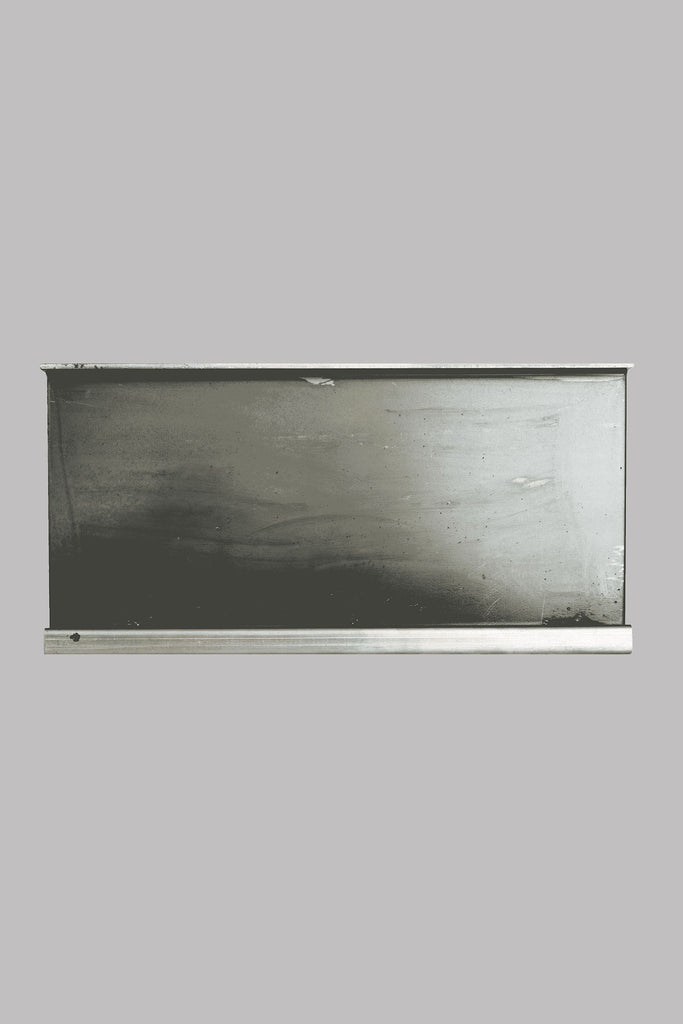
The baffle plate is the one to look at hardest. It sits in the roof of the firebox and stops the flue burning out. Once it buckles or bows it needs replacing. A firebox run with a distorted baffle can split, and that is not a repair.
Firebricks are the cheapest check and the easiest to make. Open the door on a cold heater and look at the lining. A hairline crack through a brick is normal. Loose, missing or crumbling bricks expose the steel to direct heat.
Add the parts up before you make an offer. A $400 heater that needs a baffle plate and a door rope is an $800 heater before the flue.
A $400 heater that needs a baffle plate and a door rope is an $800 heater before the flue.
The warranty stays with the original buyer
A 10-year firebox warranty is a common selling point on Australian wood heaters. It is worth reading who it covers, and the answer is usually the first owner.
The warranty terms published on this site apply to the original purchaser only. A second-hand buyer is not that person, so the remaining years do not carry over. Other manufacturers word this differently, so check before you assume the cover travels.
Two other conditions matter more on a used heater. Firebox cover is void where a damaged baffle plate has been left in place. It is also void where non-genuine parts have been fitted inside. On a heater that has passed through other hands, you cannot know either way.
Consumer guarantees under Australian Consumer Law sit separately from a manufacturer's warranty. They generally do not apply to a one-off sale between private individuals. If warranty cover matters to you, that points to buying new.
When a second-hand wood heater is a reasonable buy
A second-hand wood heater is a reasonable buy when six things line up. The first two decide whether the rest matter.
Most second-hand wood heaters for sale privately come out of a renovation, which is the better prospect. A heater removed because the room changed has usually been running fine. A heater removed because it stopped working has a reason, and the reason is rarely in the listing.
- The compliance plate is legible and the model is identifiable
- The brand still trades and still stocks parts for that model
- It is being sold because of a renovation or a move rather than a fault
- The manual comes with it
- An installer has said they will certify it
- You have budgeted for a new flue kit on top of the price
Meet all six and a second-hand heater can be a sound buy. That holds best where the budget is tight and it is going into a holiday house. Miss two or three and you are buying someone else's problem. The discount stops being a discount.
Common questions about buying second-hand
Can you legally sell a second-hand wood heater?
It depends on where you live, and the rule generally sits on the seller. Tasmania is the clearest published case. Its Environmental Management and Pollution Control (Smoke) Regulations 2019 set the rule. A heater cannot be sold unless it is marked to the 2014 Australian Standards. It must also hold a laboratory certificate. The EPA states this covers private sales as well as retail ones. New South Wales words it similarly in its Protection of the Environment Operations (Clean Air) Regulation 2022. Other states differ, so check your own state regulator and council before you list one.
Can I use the flue that is already in my house?
Only if an installer inspects it and signs off. A flue is matched to the appliance and to the roof. An existing run is rarely right for a different heater. Have it swept and inspected before anything is connected.
How do I tell how old a wood heater is?
Start with the compliance plate, which usually carries the model and often a date or serial number. If the plate has gone, measure the heater. On this range, the length of the top mantle piece identifies the model. On an inbuilt heater it is the top plate. There is a published guide for that on the spare parts page. Once you have the model, the manufacturer can tell you when it was made. They can also say whether parts are still stocked.
One thing is worth doing before you commit rather than after: identify the model.
The model is what tells you whether the parts still exist. Without it you cannot price a baffle plate or order a door rope. With it, all of that takes one phone call. Sellers often do not know the model themselves, and the plate is frequently unreadable. So measure the heater yourself while you are there.
If it turns out to be an Ultimate, the spare parts team can identify it from those measurements. The number is 03 9767 3400. The showrooms in Victoria, South Australia and Western Australia have the range on the floor. The flue kit is priced as a separate line there, so you can put the two sums side by side.
- Tags: Helpful Info Tips & Tricks