
Why does one wood heater cost three times as much as another?
Posted by Ultimate Showroom on
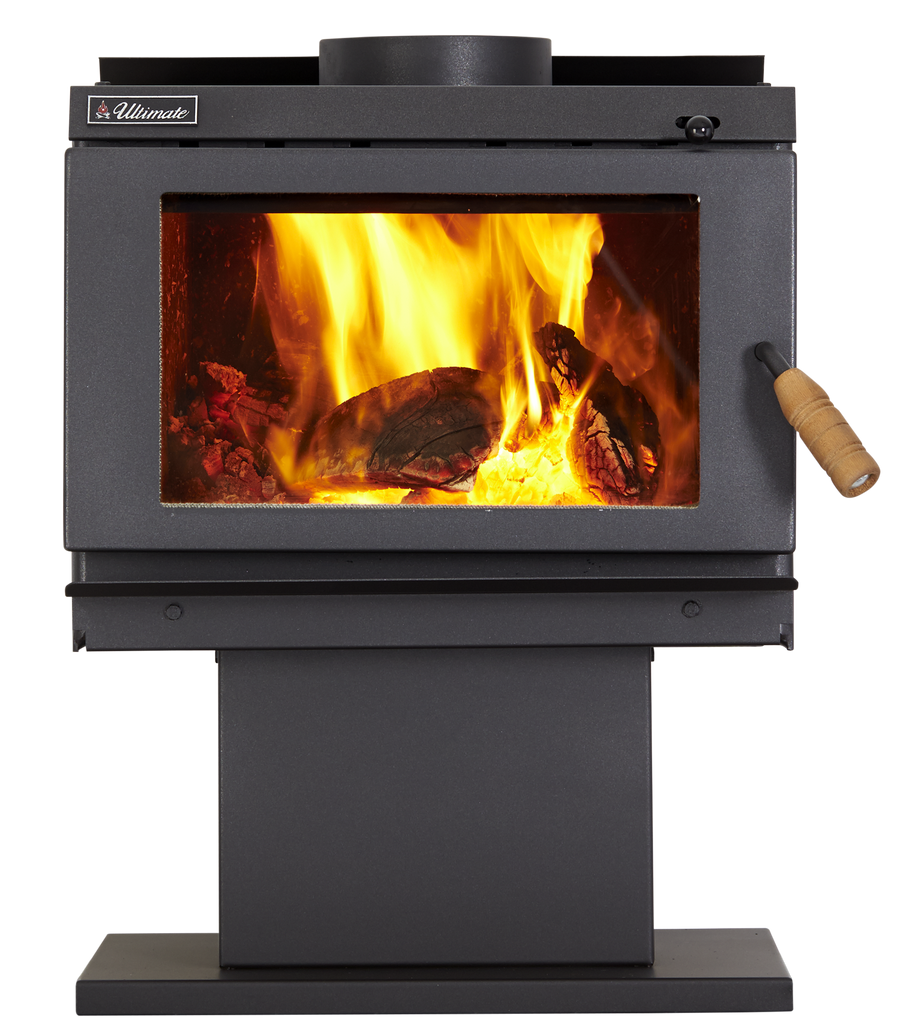
Two freestanding heaters sit a metre apart on the showroom floor. Same black steel box. Same glass front. Both rated for a room about the size of your lounge. One is under $2,000. The other is over $6,000.
Nothing in the way they look explains the gap.
Every wood heater sold new in Australia meets the same legal standard. The price difference sits in four places. How the firebox is made. How long that firebox is covered by warranty. Whether the flue kit and the installer are in the price. And whether spare parts will still be made in ten years. Work through those four and most of the gap between two quotes becomes visible.
What is the same at every price
Certification is the one part of a wood heater that does not vary with price. Every wood heater sold new in Australia is tested to two Australian Standards. AS/NZS 4013 covers flue gas emissions and caps particles at 1.5 grams for every kilogram of wood burnt. AS/NZS 4012 covers efficiency and sets a minimum of 60 per cent. Both limits have applied to new heaters across Australia since 2019.
A certified heater carries a compliance plate naming both standards. It usually sits inside the firebox or on the back of the unit. The Australian Home Heating Association publishes a list of certified models. You can check a heater against it before you hand over any money.
That settles the first worry most price-comparing buyers have. A cheaper certified heater passed the same emissions and efficiency test as a dearer one. Compliance is a floor rather than a feature, and any new heater you can legally buy has cleared it.
The test measures one thing, and it measures it well. It is run on a new appliance in a laboratory, on a set fuel load. It says how cleanly and efficiently the heater burns when it is new. It says nothing about how the steel will look after fifteen winters. It says nothing about whether you can buy a baffle plate for it in 2036.
It says nothing about how the steel will look after fifteen winters. It says nothing about whether you can buy a baffle plate for it in 2036.
Where the price difference goes
The price difference goes into parts of a heater a photograph cannot show you. It also goes into costs that sit outside the box altogether. Five things move the number more than the rest.
Firebox steel. A firebox holds a fire at several hundred degrees, most nights, for four or five months a year. Thicker plate holds its shape for longer under that load. Thinner plate warps sooner, and a warped firebox ends a heater rather than sending it in for a repair.
Warranty term. Firebox warranties in this market run from about a year to ten years. Ask which part of the heater the term covers. Fireboxes, baffles, glass and door seals are often covered for different periods, and wear parts are frequently left out. An Ultimate firebox is covered for ten years, which gives you a term to measure any other quote against.
The flue kit. A wood heater without a flue is a box. The kit takes in the flue pipe, the casings, the ceiling ring, the roof flashing and the cowl. Every Ultimate product page publishes it as a separate $650 line. The figure is the same on freestanding and inbuilt models. Some sellers build the kit into the advertised price. Others leave it off. The sticker will not tell you which.
Installation. A licensed installer charges somewhere between $1,000 and $5,500 for labour and materials, depending on the house. A single storey freestanding job with easy roof access sits near the bottom of that range. An inbuilt heater in a two storey home with a raked ceiling sits near the top.
The floor and the delivery. Every wood heater needs a non-combustible base under it. A concrete slab or an existing tiled floor often does the job. A timber or carpeted floor needs a hearth built, which commonly runs $400 to $600 for a standard size. Delivery is its own line again.
Set out as numbers, a heater is four or five prices rather than one.
| Cost line | Typical figure | In the advertised price? |
|---|---|---|
| The heater | $1,149 and up | Yes |
| Standard flue kit | $650 | Sometimes |
| Installation | $1,000 to $5,500 | Rarely |
| Hearth or floor protector | $400 to $600 | Rarely |
| Delivery | From $100 in Melbourne metro | Sometimes |
Will you still get parts in ten years?
A well built wood heater lasts 15 to 20 years. Over that time the door glass, the door rope, the fire bricks and the baffle plate all wear out. They are meant to. The thing worth asking before you buy is whether those pieces will still be made when yours give up.
Current replacement prices give you the scale of it. A single fire brick is $35. Door glass starts at $100. Two metres of door rope is $100, and the tape that seals the glass is the same. Baffle plates start at $300. A complete replacement door starts at $500. A technician visit is booked with a $250 fee upfront.
None of those numbers hurt if the parts exist. All of them become a new heater if they do not.

This is where a locally made heater earns part of its price. A part made in Melbourne for a long-running model comes off a shelf. A part for a discontinued import is a phone call, a wait, and sometimes a no. Ask any seller two questions. Where are the parts made, and how long has this model been in the range? A model that changes every season is harder to support in ten years.
None of those numbers hurt if the parts exist. All of them become a new heater if they do not.
When the cheaper heater is the right call
A cheaper heater is the right call when the job is small or seasonal. A shed or workshop used on weekends does not need a firebox built for fifteen winters of nightly use. Nor does a holiday house, a small single room, or a rental you plan to sell soon.
A heater in a Ballarat lounge room runs hard from May through to September. A heater in a Geelong beach house might see twenty nights a year. The second one has a much easier life. Paying for heavy plate it will never test is money better spent on the flue or the hearth.
Size matters more than price in that decision. An oversized heater choked down low burns dirty and blackens its own glass. Matching the heat output to the room does more for the house than the extra you spend.
What to ask before you compare two prices
Ask both sellers the same questions. Two numbers that looked nothing alike become comparable.
- Is the flue kit in this price, and how many metres of flue does it cover?
- Is installation included, and is the installer licensed?
- What does the warranty cover, and for how many years?
- Are replacement bricks, glass, seals and baffles stocked in Australia?
- Does the price include a hearth or floor protector?
- What does delivery cost to my address?
Get the answers in writing. A quote that lists labour, flue materials and hearth work as separate lines can be compared. A single lump figure cannot.
Frequently asked questions
Are cheap wood heaters any good?
For the right job, yes. Any wood heater sold new in Australia has passed the same emissions and efficiency test. What you give up at the cheaper end is usually steel thickness, warranty term and parts support. For a shed or a holiday house, those are often sensible trade-offs.
Does the price of a wood heater include installation?
Usually not. Most advertised prices cover the heater alone. The flue kit and the installer are separate, and together they commonly add more than $1,500 to the job. Ask about both before you compare two prices.
Do cheaper wood heaters meet Australian standards?
Any wood heater sold new in Australia has to meet AS/NZS 4013 for emissions and AS/NZS 4012 for efficiency. Check the compliance plate inside the firebox or on the back of the unit. A second hand heater is a different question, because older units can pre-date the current limits.
One last thing does more for a tight budget than picking the cheapest box. Wood heaters are discounted hardest at the end of the heating season. Showrooms clear stock before the new season's models land. The same money in August often buys a heavier unit than it does in May. The flue kit and the install cost the same either way.
Bring the quote you already have to an Ultimate Fires showroom in Victoria, South Australia or Western Australia. Our staff will set it beside ours line by line: heater, flue kit, hearth, delivery and installation. If the other one is the better buy for your room, you will hear that too.
- Tags: Helpful Info Wood Heaters